
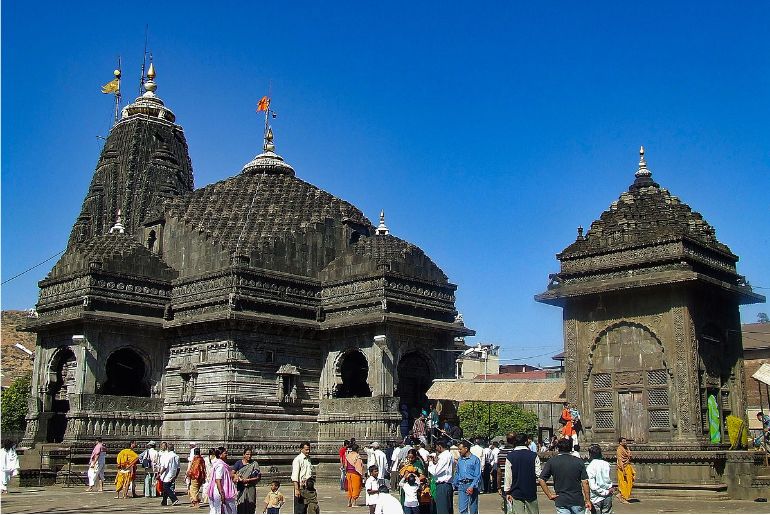
Trimbakeshwar Temple, Nashik – Jyotirlinga, History and Darshan Guide
Trimbakeshwar Temple is one of the most important Hindu pilgrimage destinations in Maharashtra, located in the town of Trimbak near Nashik. Nestled at the foothills of the Brahmagiri mountain range, the temple is revered as one of the twelve sacred Jyotirlingas dedicated to Lord Shiva.
Built primarily from black stone, the temple is known for its traditional Hemadpanthi-style architectural features and religious significance. Devotees visit throughout the year to offer prayers, perform religious rituals, and explore the sacred sites associated with the origin of the Godavari River.
History and Religious Significance of Trimbakeshwar Temple
Trimbakeshwar Temple holds a special place in Hindu religious tradition as one of the twelve Jyotirlingas of Lord Shiva. The present temple structure is associated with the 18th-century Maratha period and is traditionally credited to Peshwa Balaji Bajirao.
The temple is particularly distinctive because its sacred lingam is associated with the three deities of the Hindu trinity: Brahma, Vishnu, and Shiva.
Trimbakeshwar is also closely connected with the Godavari River, which is revered as one of India's sacred rivers. The surrounding region attracts pilgrims undertaking religious journeys, ritual bathing, and visits to important temples and water bodies.
Major Attractions at Trimbakeshwar
✦1. Sacred Trimbakeshwar Jyotirlinga
The main shrine houses the sacred lingam associated with Brahma, Vishnu, and Shiva. Devotees visit the temple to offer prayers and participate in religious observances.
✦2. Traditional Black-Stone Architecture
The temple is noted for its black-stone construction, carved architectural details, and traditional design elements associated with the Hemadpanthi style.
✦3. Kushavarta Tirtha
Kushavarta Tirtha is a sacred water tank in Trimbak associated with the religious traditions surrounding the Godavari River. Pilgrims visit this important site for ritual bathing and religious ceremonies.
✦4. Brahmagiri Hills
The nearby Brahmagiri mountain range is closely associated with the origin of the Godavari River in Hindu tradition. The surrounding landscape also attracts visitors interested in nature, trekking, and spiritual exploration.
✦5. Religious Rituals and Pilgrimage
Trimbakeshwar is known for various Hindu rituals and ceremonies. Visitors planning specific religious observances should consult the temple authorities or authorised local priests regarding procedures, availability, and applicable charges.
Trimbakeshwar Temple Visitor Information
Best Time to Visit Trimbakeshwar Temple
The cooler months from October to March are generally suitable for temple visits and exploring the surrounding area.
The Shravan month and Maha Shivratri are particularly significant religious periods, attracting many devotees. During these times, visitors should expect larger crowds and possible changes to darshan arrangements.
Early-morning visits may offer a more comfortable experience, depending on the day's queue and temple schedule.
How to Reach Trimbakeshwar Temple
From Nashik: Travel by road towards Trimbak. The journey typically takes around an hour, depending on traffic and the starting point.
From Igatpuri or Ghoti: Travel towards the Nashik–Trimbak region using the available connecting roads. Check current navigation directions for the most suitable route.
By Train: Nashik Road and Igatpuri are railway access points for the wider region. From either station, continue to Trimbak by road.
Journey times and distances vary with traffic, route selection, and seasonal conditions.
Travel Tips for Visitors
Why Visit Trimbakeshwar Temple, Nashik?
Trimbakeshwar Temple combines religious significance, historic architecture, and a close association with the Godavari River. Whether you are visiting as a devotee, exploring Maharashtra's Jyotirlinga temples, or discovering the spiritual heritage of Nashik, Trimbakeshwar is an important destination to include in your travel plans.